I used to watch the African coffin dance videos online. I thought people made them for fun.
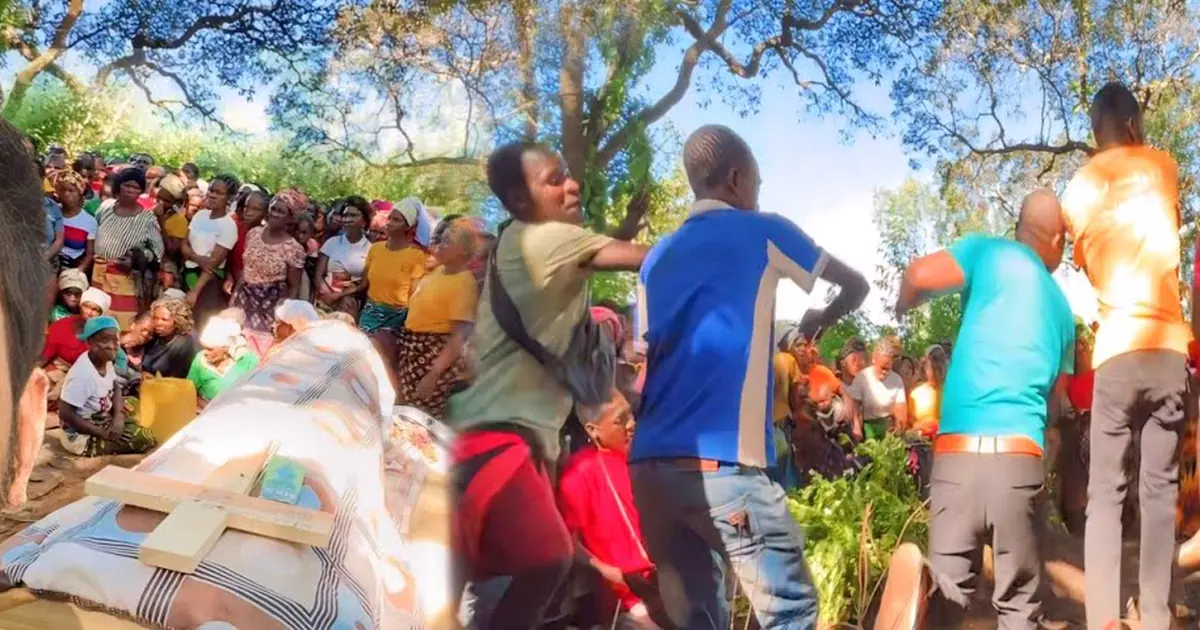
Then I stood at a grave in a Mozambique village and watched it for real. Drums. Songs. And people dancing beside the grave.
Losing someone close is a grief for anyone, anywhere. So why dance?
Here, the farewell is meant to be joyful, not only sad.
At the funeral I filmed in a Mozambique village in early 2024, friends and neighbours danced and sang beside the grave. As I came to understand it, the farewell here is meant to be joyful. The dance and songs help people bear the grief, and they are believed to drive evil spirits away from the grave.
01 — Early 2024Two burials in one day
Two or three days earlier, there had been a big accident in our village.
It happened a little way from our shop. A vehicle carrying passengers overturned. One person died on the spot. Two more died after they were taken to hospital.
Two of the three were from this village. So the whole village was in mourning for the whole week.
On the day I filmed, two of them were buried. One grave was being filled on the left. On the right, another grave stood ready for the evening.
02 — In the forestThe only Muslim at the grave
The whole village went to the grave. Some walked. Some rode in the backs of trucks.
The coffin came in a car at the front. The grave was in the forest, under tall trees.
Everyone there was Christian. I was the only Muslim.
As far as I knew, a coffin is lowered on ropes from both sides. Here they didn't use rope. They cut long vines from a tree nearby and used those instead.
Before the coffin went down, a man checked the grave. “It'll do. The measurement is right.”
The coffin was covered with a cloth and a wooden cross. I had never seen a burial like this in my life.
I am not mocking their tradition, and I am not taking a side. It was something new to me, so I showed it to you as it happened.
03 — The reasonWhy do they dance at a funeral?
When we say goodbye to someone, even for a journey, we do it with sadness. Here, the idea is the opposite.
The farewell should be joyful.
The family sits to one side and weeps. His mother, his father, his brothers and sisters, his wife, his children. And while they cry, friends and neighbours send him off with joy.
That is an African idea people hold on to here. Through dance, song and joy, they try to forget the grief of a death.
There is a second belief too. The dance beside the grave drives evil spirits away. It is an African belief, and part of an African culture.
One of the men dancing beside the grave was the dead man's elder brother.
04 — Early 2023“I am a healer”
A year before that funeral, I sat down at a small wooden table with a kobiraj, a traditional healer.
“Good afternoon. How are you?”
“I'm well, thank you.” Then, to someone in the house: “Bring two chairs. What's taking so long?”
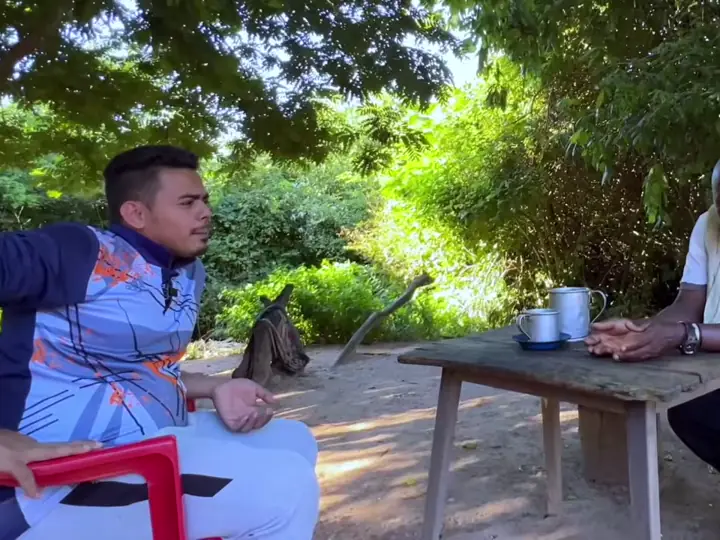
“I work right here. I am a healer,” he said. “I go to South Africa to work. I go to Zimbabwe too. And I work here at home.”
He started this work in 1981, he told me.
“What kind of work do you do?”
“All kinds.”
I asked about something I often hear. That with magic, money can be made to disappear. “Is that true?”
“Yes. True.”
Some women were nearby. “Are they your relatives?” I asked.
“No. They are my wives.” All of them, together, in one house. “Here I live with five wives.”
05 — The hut behind the house“You can get in. But you can't get out.”
Behind his house stood a round thatched hut. “That is the office for my work,” he said.
“Can I go and see it?”
“Yes, no problem.” We walked over. “This is the office.”
“Can't I go inside?”
“No. Not inside. You can't go in there. If you go in, you must go in with some work to be done.”
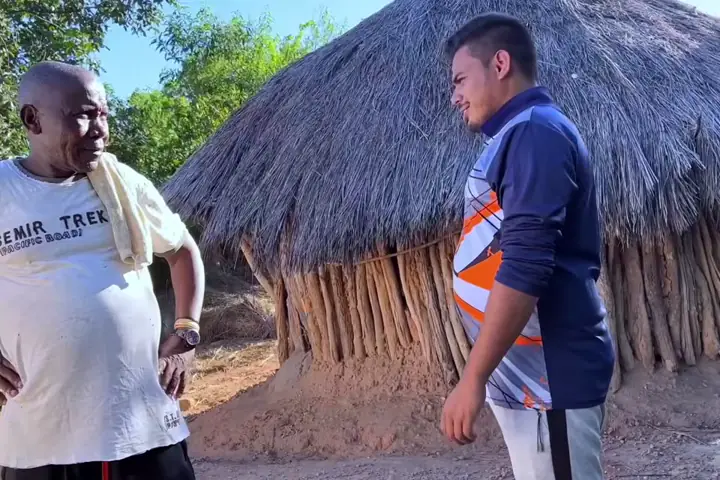
Then he told me that robbers can never come here.
“Why not?” I asked.
“There is something here. Say you came here to steal. You couldn't leave. You would have to stay right here. In the morning, you would understand.”
“You can get in. But you can't get out.”— The healer
Then he told me how someone learns his work. You come and sleep in that room. By tomorrow, you have learned everything, and you can work as a healer.
“You can't run away,” he added. “If you run, you lose the initiation.”
“Just hearing it scares me,” I said.
06 — Over roasted maize“Do you know Pakistan?”
He sent one of his wives to bring maize, to roast it right there for me to eat.
And he told me about a war. When war came here, he fled to Zimbabwe. After the war, he came back.
So I told him about ours. “Our country, Bangladesh, fought a war too. Do you know Pakistan?”
“Yes, I know it.”
We were once one country with Pakistan, I told him, and they pushed everything on us, even their language. So first came the fight for our language. In the end they said: all right, your state language is Bangla. That is why 21 February is International Mother Language Day.
Then, in 1971, came another war. Nine months of it. We said we would not stay with them any more. We wanted our own free country.
“That is how another country is born,” I said.
“Yes!”
When I left, he said one more thing. “Call me when you get home, so I know you arrived safely.”
WatchWalk to the grave with us
Watch “আফ্রিকায় নাচের তালে-তালে দাফন করে মৃতদেহ!” on YouTube · 1.7 million views

FAQQuestions people ask about African funerals and healers
Why do people dance at funerals in Africa?
At the burial I filmed in Mozambique in early 2024, the idea was that the farewell should be joyful. While the family wept, friends and neighbours danced and sang to help bear the grief, and the dance beside the grave is believed to drive evil spirits away.
What happens at a funeral in rural Mozambique?
At the burial I filmed in early 2024, the whole village walked or rode in trucks to a grave in the forest. The coffin, covered with a cloth and a wooden cross, was lowered on vines cut from a tree instead of ropes, and people sang and danced beside the grave.
Is the African coffin dance real?
I had seen coffin dance videos online and thought they were made for fun. In early 2024 I saw people dance and sing beside a grave at a real burial in a Mozambique village.
What does a traditional healer do in Mozambique?
The healer I met in early 2023 told me he does “all kinds” of work, at home and on trips to South Africa and Zimbabwe, and that he started in 1981. He kept a separate thatched hut as his “office” and wouldn't let me inside.
Is black magic real in Africa?
I can only tell you what I was told. When I asked the healer whether magic can make money disappear, he said yes. He also said a thief who came to his house could never leave. Those are his words, not mine.
How many wives did the healer have?
Five. He told me all five live with him in one house.