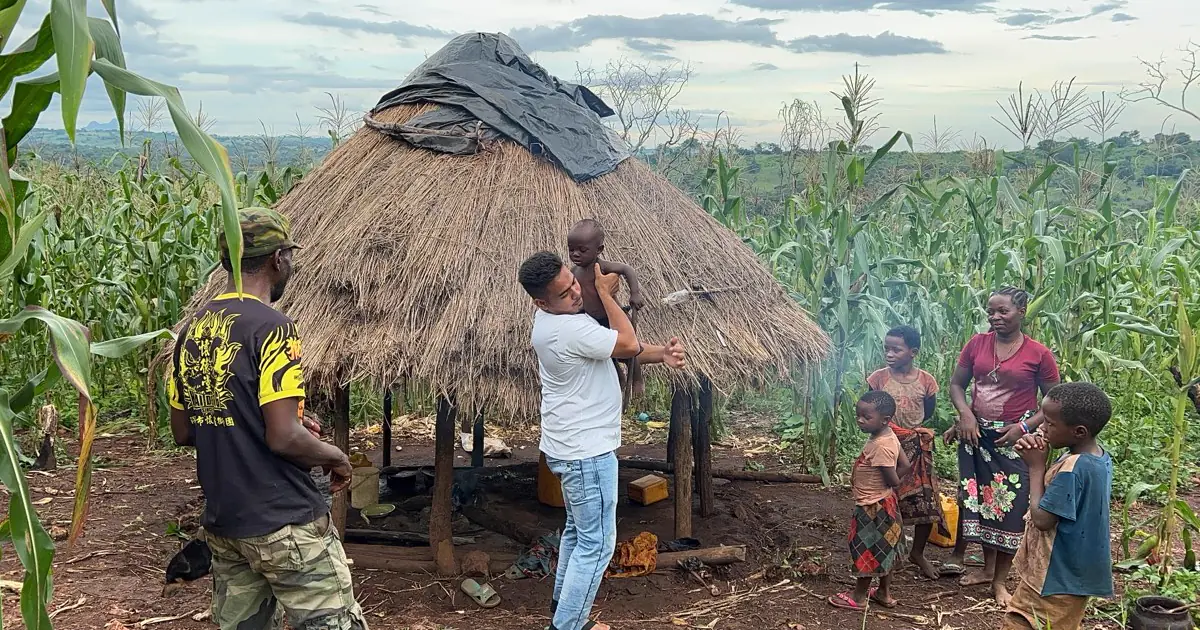
The old man stopped in the middle of his maize field and pointed.
“In 1994, my home was over there.”
Then he added one more thing.
“I had five wives then. I don't need any more.”
He is the man I call my jungle grandfather. And he is only one of the families who took me in.
Big families, open doors, and no guest leaves empty-handed.
African village family life, as I have lived it in Mozambique, is big and close. My “jungle grandfather”, born in 1962, has 14 children. Families cook outside, grow their own maize and serve the guest first. When I ate lunch with one family in 2022, they sent me home with a live chicken.
- My jungle grandfather
- Born 1962 · 14 children, 4 of them married
- In 1994
- He had five wives
- Lunch with my African parents
- October 2022 · ended with a live chicken
- My African dadi
- Roasts peanuts in a pot of sand over a wood fire
- Avocado trees
- In the yards of about 9 houses in 10, by my guess
- Back in the village
- Late 2024, after three and a half months away
01 — Early 2023Fourteen children, and a grandfather on my motorbike
He rode on the back of my motorbike, along a narrow path through tall grass.
I asked how many children he had.
“Fourteen,” he said. “Four are married.”
I asked his age. He was born in 1962.
His house was brick, with a tin roof. Avocado trees stood around the yard. Around here, I think about nine houses in ten have avocado trees. Back home, we know avocado as an expensive fruit.
He pointed at the branches. “When these ripen, I'll send you some too. I'll just give them. You won't have to buy.”
Then he said the line I still remember from that day.
“You came to me. That was a very good thing to do.”
02 — The family farmLunch at a hut in the maize
His family wasn't at the house. They were out at the cooking hut, deep in the maize.
Women, children, a dog, a fire under a grass roof. “Good afternoon. How are you?”
I had brought bags of things with me. “Give these to the children,” I said.
“So much!” someone said.
I asked what they were growing. One word: “Maize.”
Of course they asked if I would eat. We picked fresh cobs from the field, and they roasted them for me on the fire.
I peeled mine and ate it the way they did. It was delicious.
Afterwards he walked me further into the field. That's when he pointed and told me about 1994, and the five wives. I asked if all this land was his. Around us was maize, in every direction.
03 — October 2022The parents who won't let me go back to Bangladesh
“This is my father. And this is my mother.”
That's how I introduced them on camera. A man in a blue shirt and a woman in a yellow top and a white headscarf, on plastic chairs in their yard. Chickens walked past behind us.
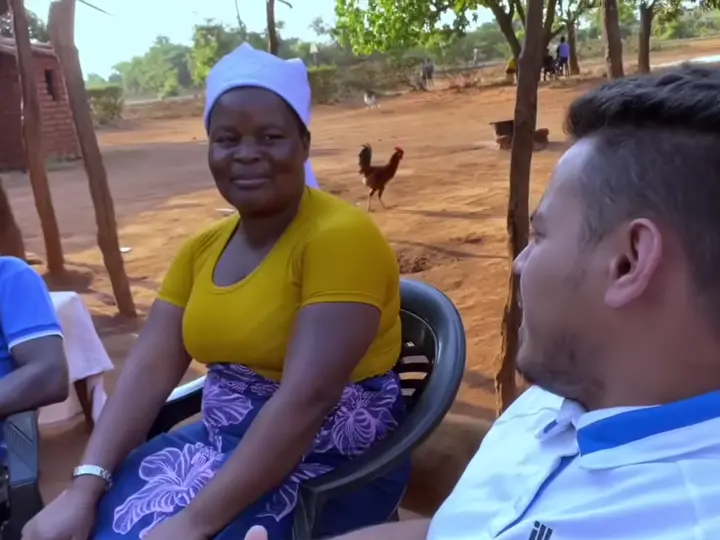
I told the camera that everything around us was mine. The house, the land, the yard.
“Am I right?” I asked my father.
“You're right!” he said.
Then they told me what they want. They want to meet their son's wife one day. And they have a rule for me.
Bangladesh is for visiting now. To live, I stay here.
“Don't go back to that country. Go there only to visit, then come back.”— My African parents
Before lunch I tried my hand at their pile of maize cobs.
“You have to be used to this,” they told me. “Your hands will crack. Look how soft your hands are. Now look at ours.”
Then their daughter came by. “This is the daughter of our house,” they said.
“Yes, your sister,” they said. So I told her: “Then I'm your big brother!”
Sitting there, I said it out loud: it doesn't even feel like I'm living abroad.
04 — The lunchA live chicken, so I could slaughter it my way
“Rice? Or xima?” they asked.
Xima, I said. I had come to a Mozambican home, so I would eat Mozambican food. Xima is the stiff maize porridge that is the staple here.
Lunch was at a table with a white cloth, with eggs in a tomato sauce. Just as we sat down, the electricity came back on.
Before we ate, they prayed. “Creator, you have given us food. We begin in your name. Amen.”
I began in the name of Allah.
Over the meal, they asked how many times my religion allows a man to marry. I told them. And I told them the condition: every wife must be provided for equally.
“This is your home anyway,” they said. “When your wife comes, get her used to coming here.”
Then the chicken arrived. A live one, held up by its feet.
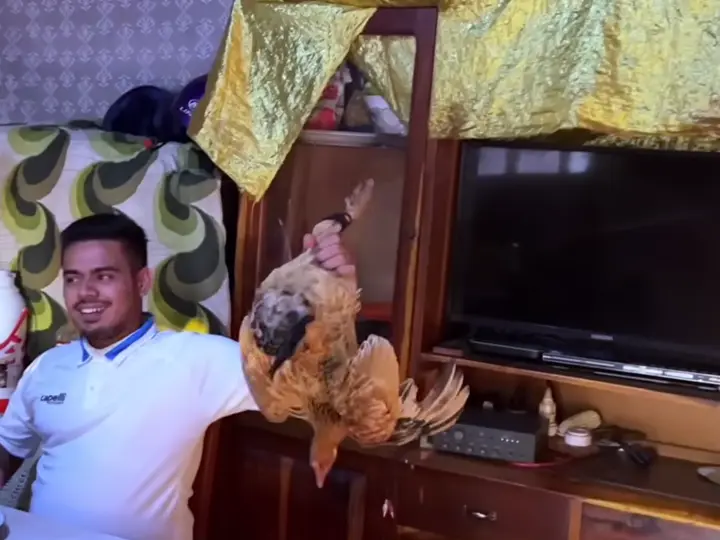
“For me?” I asked.
“Yes. To take home, cook and eat.”
This is their way. If a guest comes to the house, they don't let them leave empty-handed. The guest always takes a gift home.
And there was a reason it was alive. “Because you slaughter by your own rules,” they said. “You will slaughter it yourself. Even if it were a goat.”
I thanked them again and again. It felt good.
05 — November 2022The dadi who never imagined a foreigner at her door
“Dadi! How are you? How's work?”
Dadi means grandmother in Bangla. This one wears a yellow top, a headscarf and a checked wrap. Her yard is full of grandchildren.
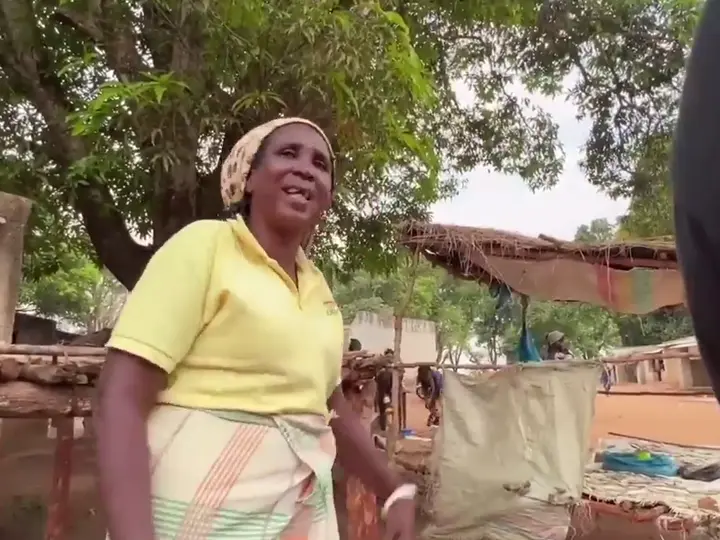
I had brought her a box of gifts. But here, the guest must take first.
The family was roasting peanuts in a pot of sand, over a fire of thick branches.
“How are they doing this?” I asked. “With sand inside!” We do it the same way back home. I love roasted peanuts. These tasted even better.
Then dadi said something I didn't expect.
“I never imagined that a foreigner like this would come to my house. Creator, keep him this way.”— My African dadi
She thought I was joking when I said this felt like my own home. I wasn't.
The whole of Mozambique feels like my home.
Before I left, the grandchildren crowded round. “Who's coming to Bangladesh with me?” I asked. “Let's go then!” they said. “There! To Bangladesh!” One little one started to cry. Nobody was going anywhere.
06 — Next door“Cut the skin, and everyone's blood is red”
Next door, a neighbour showed me around his home. Two of his wives live in one house, one in the other.
At the back was the place for washing clothes. Water is carried here and kept in a concrete basin. I counted three sections. Three wives, three parts. Nice, I said. I liked it.
The well beside it is only a year old, and it has already dried up. Water now comes from a tap.
Then he introduced his brother. They looked alike, and he said so, with one difference.
“He's a little fairer than me. And I'm darker than him.”
I couldn't let that go.
“White, black — that's nonsense talk. Cut the skin and everyone's blood is red. Am I lying? Everyone's blood is red.”
07 — Late 2024“My son got lost. Where were you?”
In late 2024, I came home to my village after three and a half months on the road.
So much had changed. A year earlier, one stretch was jungle. Now a wide road ran through it, with new houses and new walls. People were marking their plots with small paths in between. Give it ten years, and this could be a residential area.
First I found Dixon, the friend whose motorbike I used to ride everywhere. He had spent a long time working at a gold mine. He and two others found about 50 grams of gold between them.
Dixon has two wives. I had brought chips and chocolate for his children. His first wife handed them out to every child. Then she came back with about half.
I thought she was returning them. No. She was saving them for his second wife, who was out farming in the field. She would eat when she came back.
That is how equally they share.
At one house I was greeted with: “My son got completely lost! Where were you all this time?”
Then I saw my African mother. She calls me “baba”, son, in almost every sentence. She wanted to feed me. No, mother, I said, not today. So she watched my YouTube videos instead, and laughed.
My last stop was the warehouse where I started work when I first came to Mozambique. My first boss was there. His daughter Sahira, basically my cousin, was shy for the first ten or fifteen minutes. Then she was fine. Half the village's children came to stare at the camera, like they were seeing an alien.
At that lunch table in 2022, I said it doesn't even feel like I'm living abroad. Two years later, the village was still calling me son.
WatchMeet my jungle grandfather
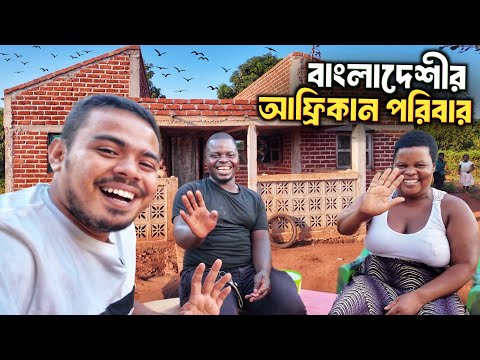
Watch “বাংলাদেশি যুবকের আফ্রিকার জঙ্গলি দাদা!” on YouTube · 1.9 million views


FAQQuestions people ask about African village families
What is family life like in an African village?
In the Mozambique villages I know, families are large and close. My “jungle grandfather”, born in 1962, has 14 children. Families cook outside, farm their own maize and treat a visitor as one of their own.
How do African families treat guests?
In my experience in Mozambique, the guest is served first and never leaves empty-handed. One family gave me a live chicken after lunch, so I could slaughter it myself by Muslim rules.
Who is your jungle grandfather?
An elderly farmer in rural Mozambique, born in 1962, with 14 children, four of them married. He told me he had five wives in 1994. The video about him has about 1.9 million views.
Do men in rural Mozambique have more than one wife?
Some of the men I've met do. My jungle grandfather had five wives in 1994, a neighbour of my dadi has three, and my friend Dixon has two.
What do village families in Mozambique eat?
Xima, a stiff maize porridge, is the everyday staple. I was also served eggs in tomato sauce, fresh maize roasted on the fire and peanuts roasted in sand.
Do you live in an African village?
Yes. I moved to Mozambique in 2018 for work and have lived in a village there for about seven years, filming the families around me for my channel Unseen AFRICA.